![AccountAbility_logo_primary_fullcolor-1.png]](https://knowledgebase.counta.com/hs-fs/hubfs/AccountAbility_logo_primary_fullcolor-1.png?height=40&name=AccountAbility_logo_primary_fullcolor-1.png)
Step by Step Guide:
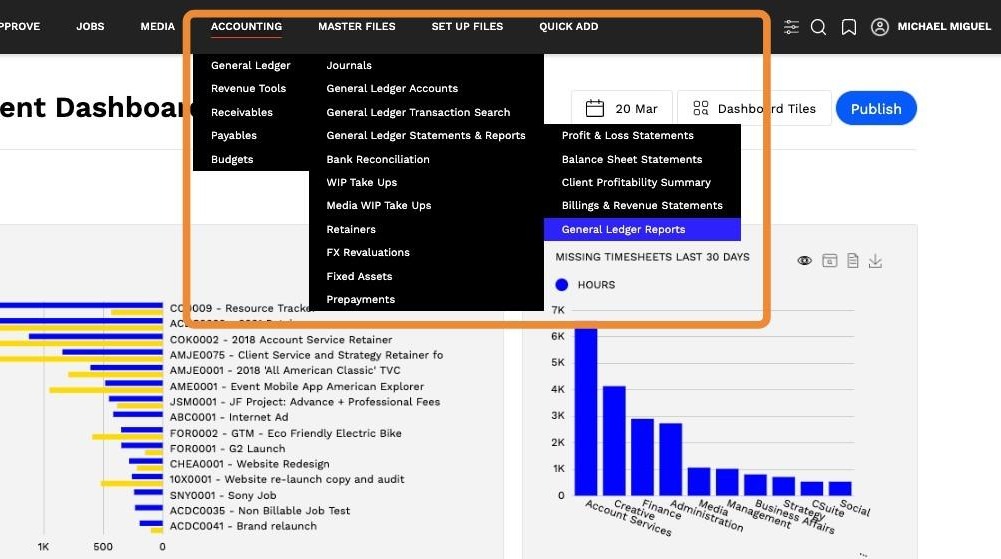
1. Navigate to ACCOUNTING > General Ledger > General Ledger Reports.
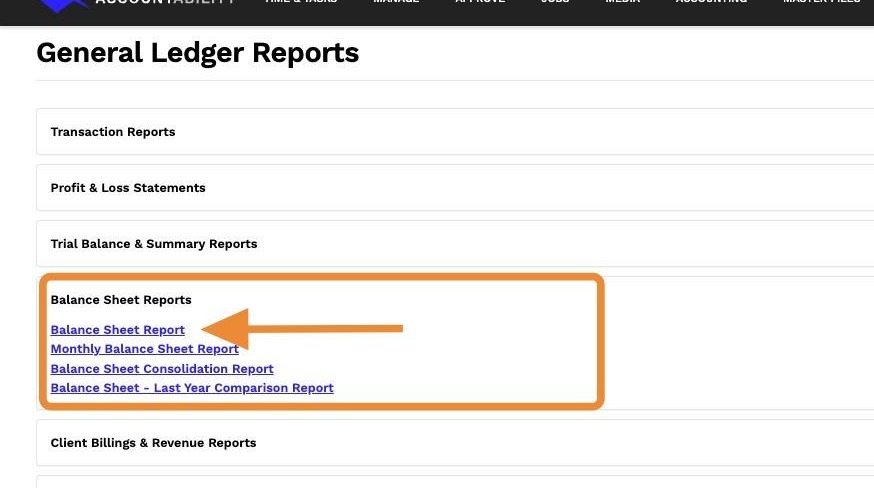
2. On the General Ledger Reports landing page, expand the Profit & Loss Statements section.
- Select the Balance Sheet Report hyperlink.
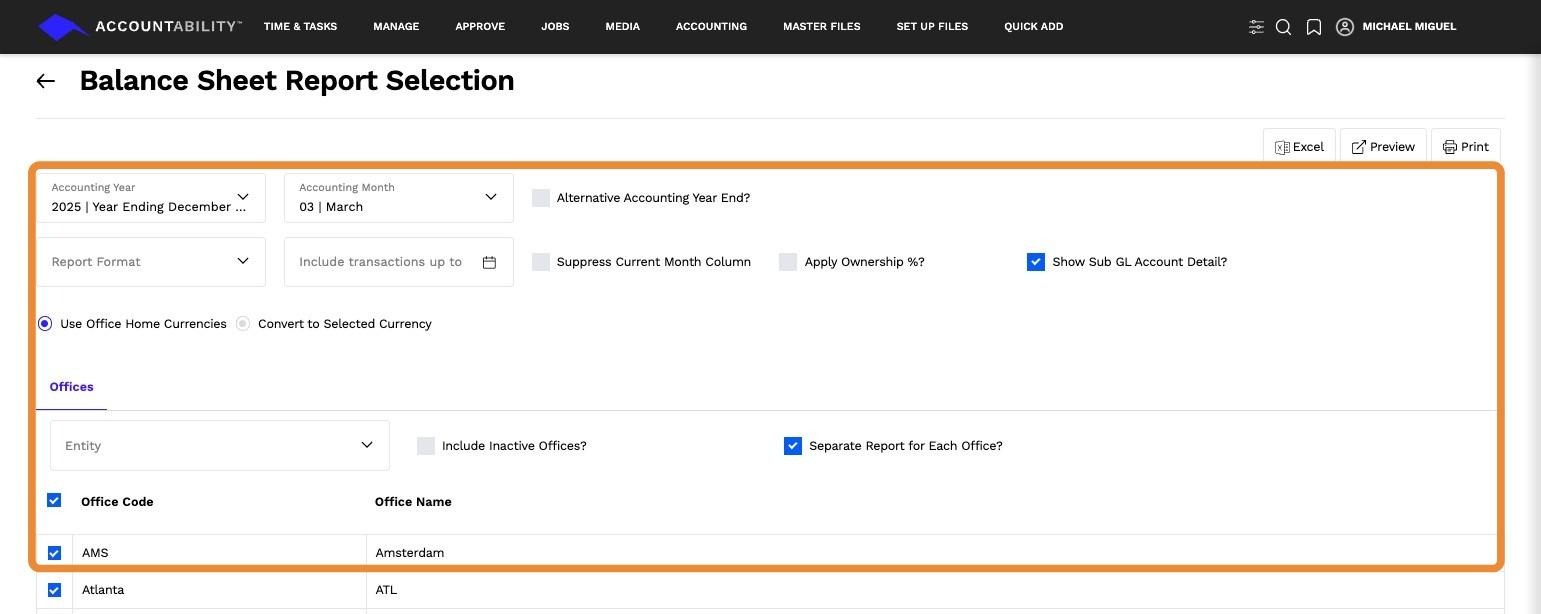
3. Enter the Required Report Parameters
The Balance Sheet Report Selection screen provides various filter options to customize the report:
- Accounting Year – Select the accounting year for the report.
- Accounting Month – Choose the reporting month.
- Alternative Account Year End? – Option to adjust the reporting year-end.
- Report Format – Select the desired format for viewing the report.
- Include Transactions Up To – Specify the date range for transactions included in the report.
- Suppress Current Month Column – Hide the current month's data if necessary.
- Apply Ownership %? – Apply ownership percentages for entities with shared ownership.
- Show Sub GL Account Detail? – Toggle between detailed or summarized GL accounts.
- Use Office Home Currencies – Enable local currency reporting for offices.
- Convert to Selected Currency – Convert balances into a selected currency.
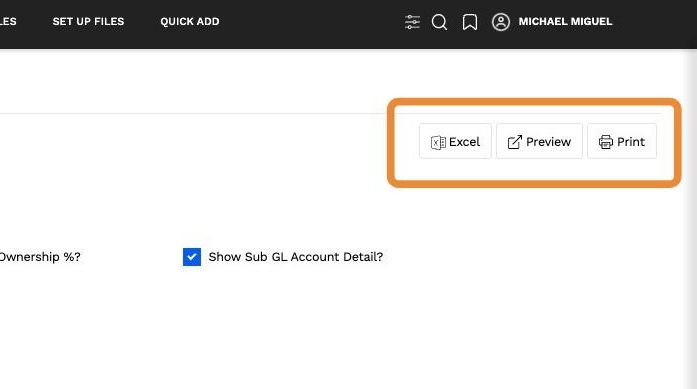
- Action Buttons – Select from Excel, Export, or Preview to generate the report.
- Offices – Choose one or more offices to include in the report.
- Entity – Select the business entity for the report.
- Include Inactive Offices? – Option to include offices that are no longer active.
- Separate Report for Each Office? – Generate separate reports per office if required.
4. Generate and Export the Report
- Click PREVIEW to view the Balance Sheet Report on-screen.
- Select Excel to download the report as a spreadsheet.
- Choose Export to generate a PDF or other formats for reporting purposes.
5. Understanding the Report
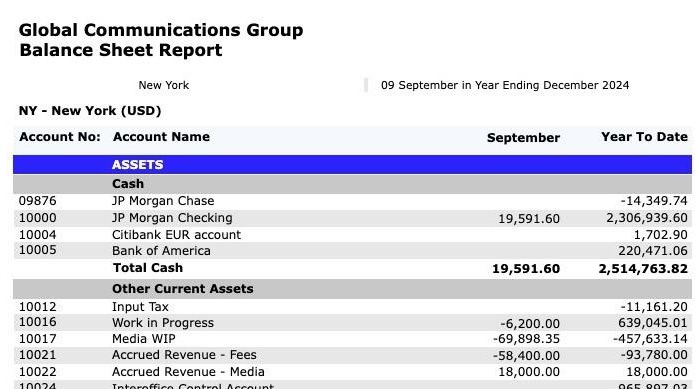
The Balance Sheet Report is structured into three key financial sections:
- Assets – Includes cash, accounts receivable, inventory, and fixed assets.
- Liabilities – Shows accounts payable, loans, and outstanding financial obligations.
- Equity – Represents retained earnings, share capital, and owner’s equity.
Each section provides a detailed breakdown of balances, helping users assess:
- Financial health – Compare assets vs. liabilities to determine solvency.
- Liquidity – Evaluate short-term assets against short-term liabilities.
- Equity position – Understand ownership structure and retained earnings.
If currency conversion is enabled, amounts will be displayed in the selected currency.