
Step by Step Guide:
Bank Reconciliation Page Overview
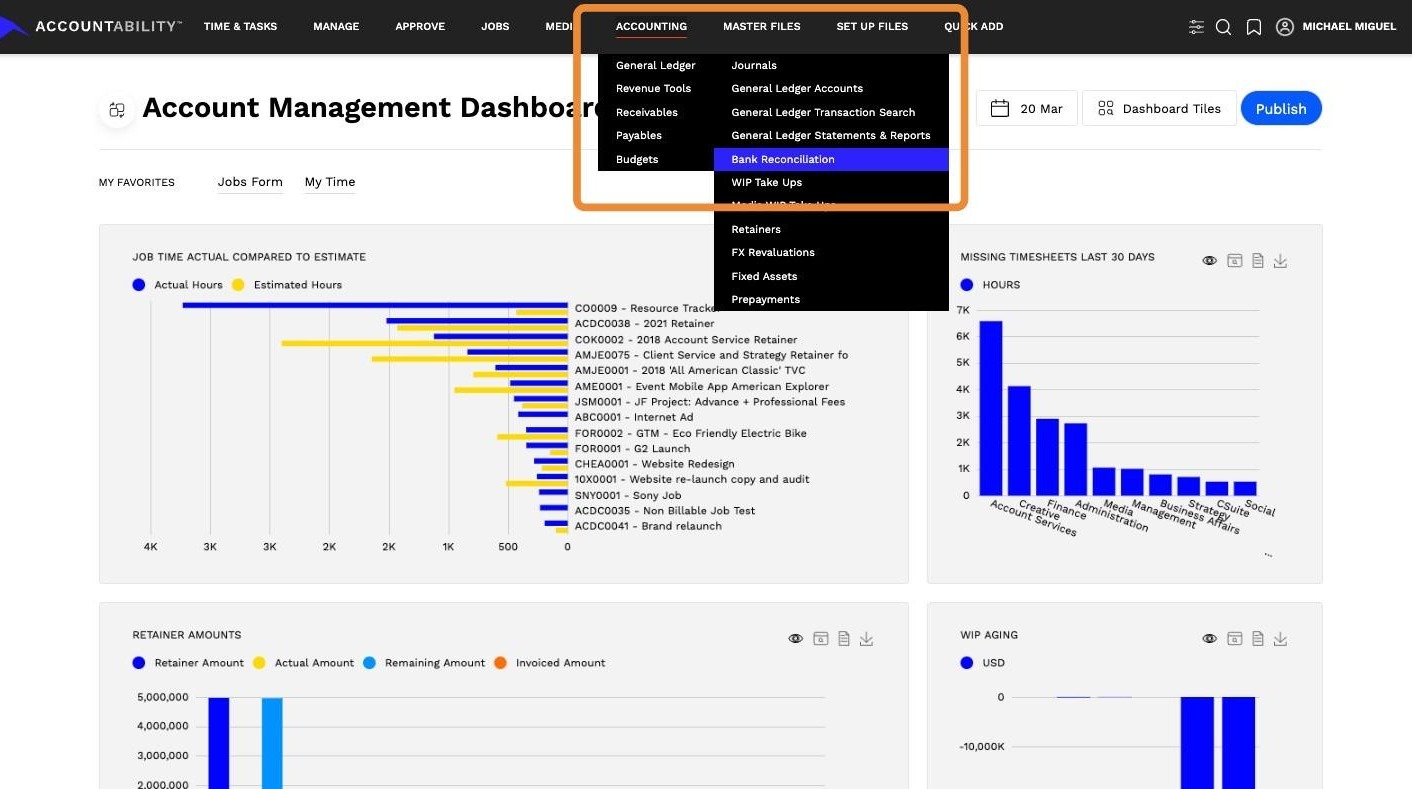
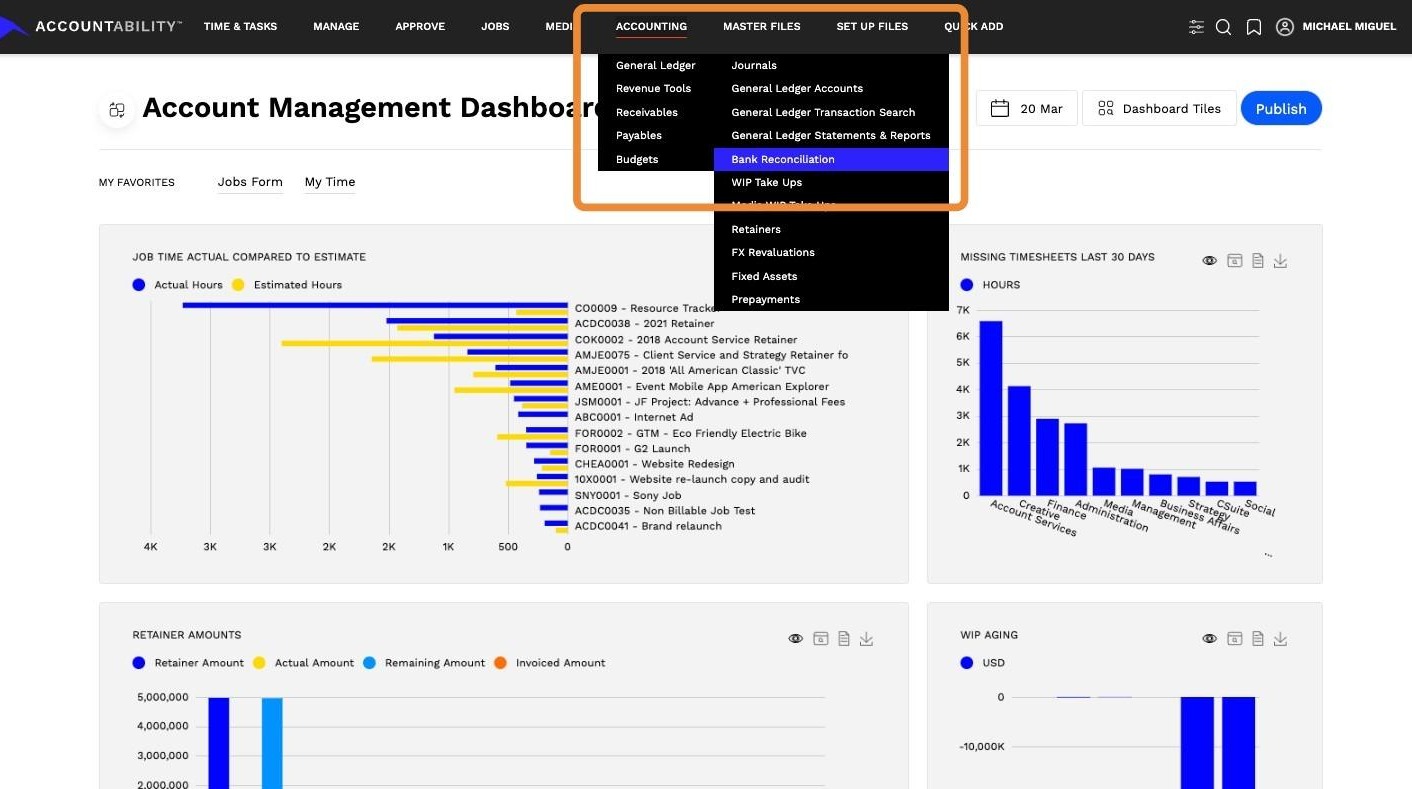
1. Navigate to ACCOUNTING > General Ledger > Bank Reconciliation.
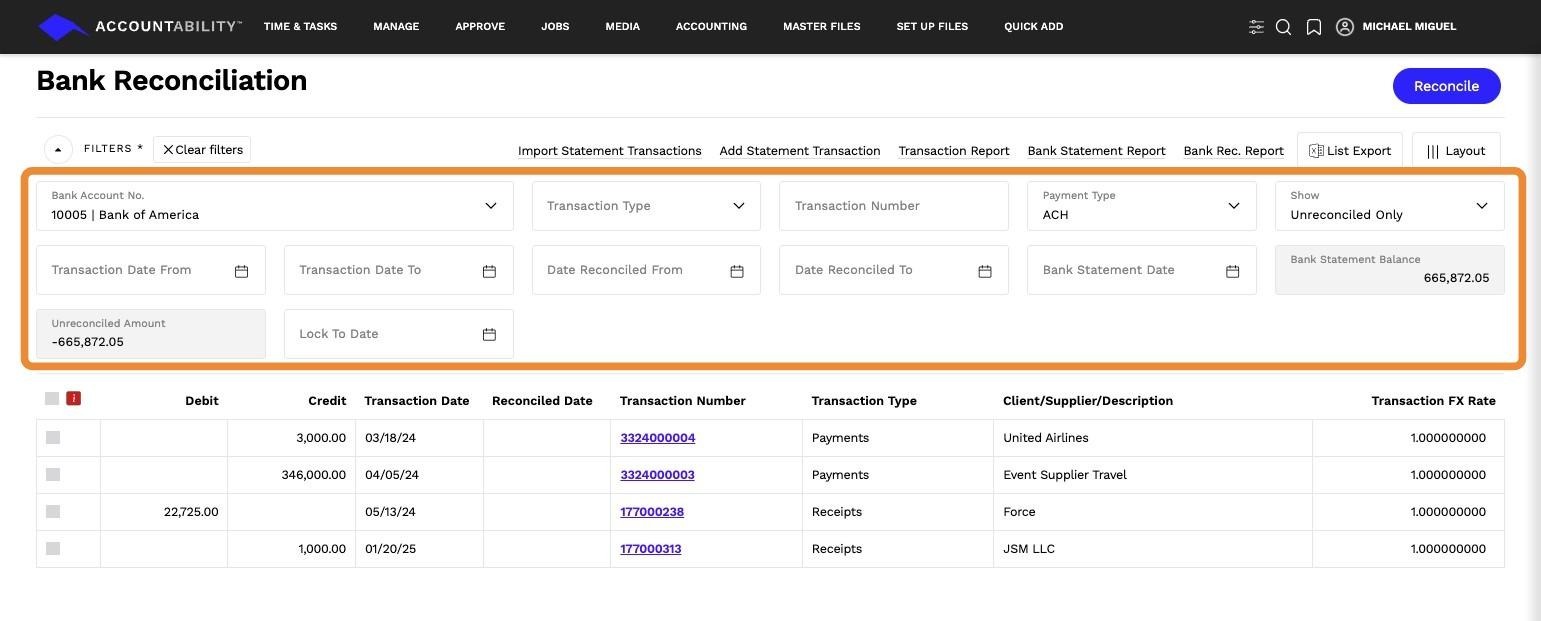
2. Filters & Search Bar
- Allows users to refine transaction searches using various filters:
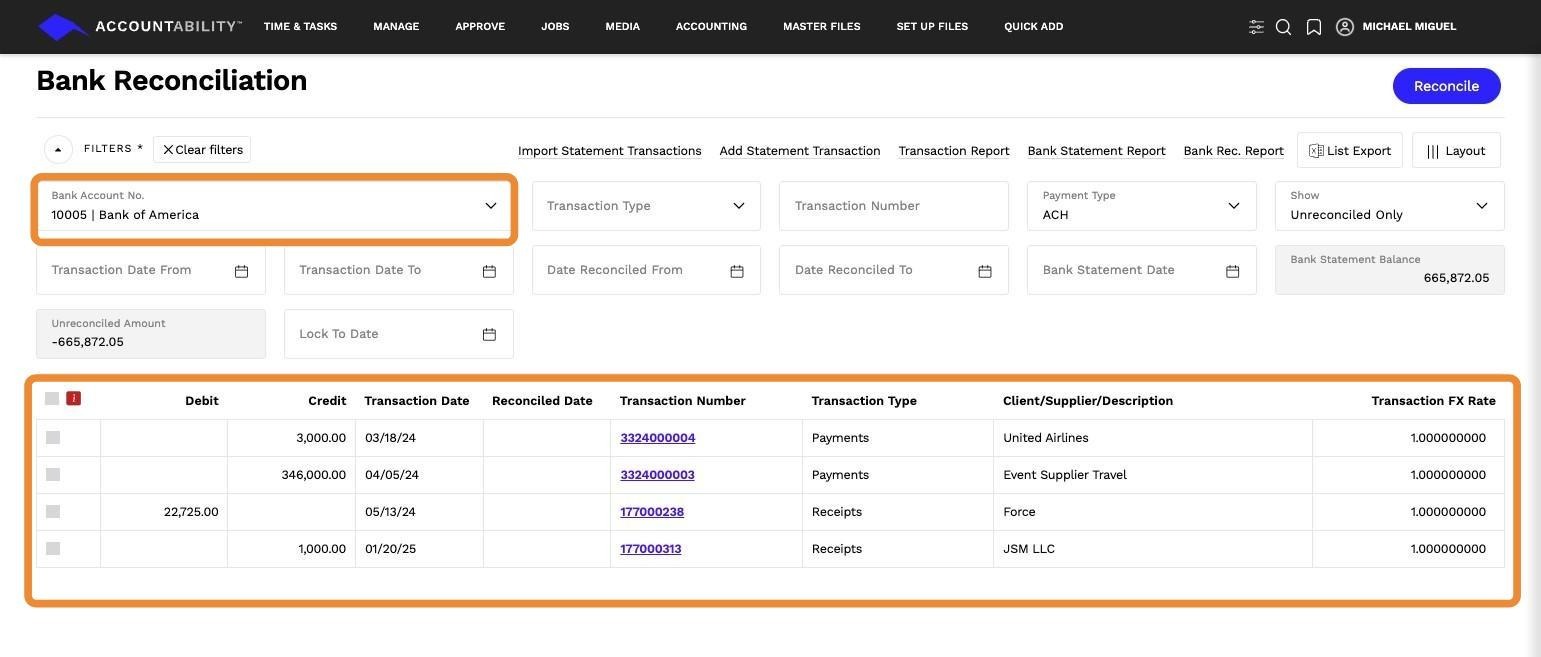
- Bank Account No. – Select from the available bank accounts.
- Transaction Type – Filter by Payments, Receipts, or all transactions.
- Transaction Number – Search for a specific transaction ID.
- Payment Type – Filter transactions by method (ACH, Wire, Check, etc.).
- Show Options:
- Un-Presented Only – Displays transactions not yet cleared in the bank.
- Presented Only – Displays reconciled transactions.
- Presented and Un-Presented – Shows all transactions.
- Transaction Date From/To – Set date ranges to refine search results.
- Date Reconciled From/To – Filter by when transactions were marked as reconciled.
- Bank Statement Date – View transactions based on the selected bank statement.
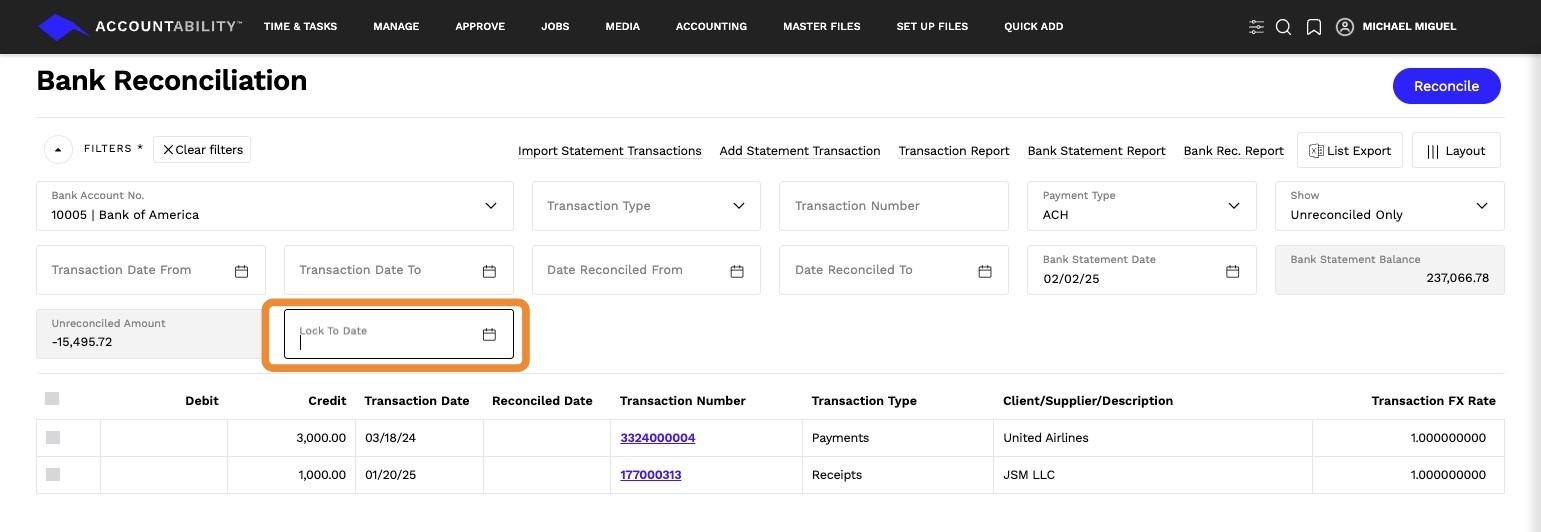
- Lock to Date – Set a lock date to prevent changes to prior reconciliations.
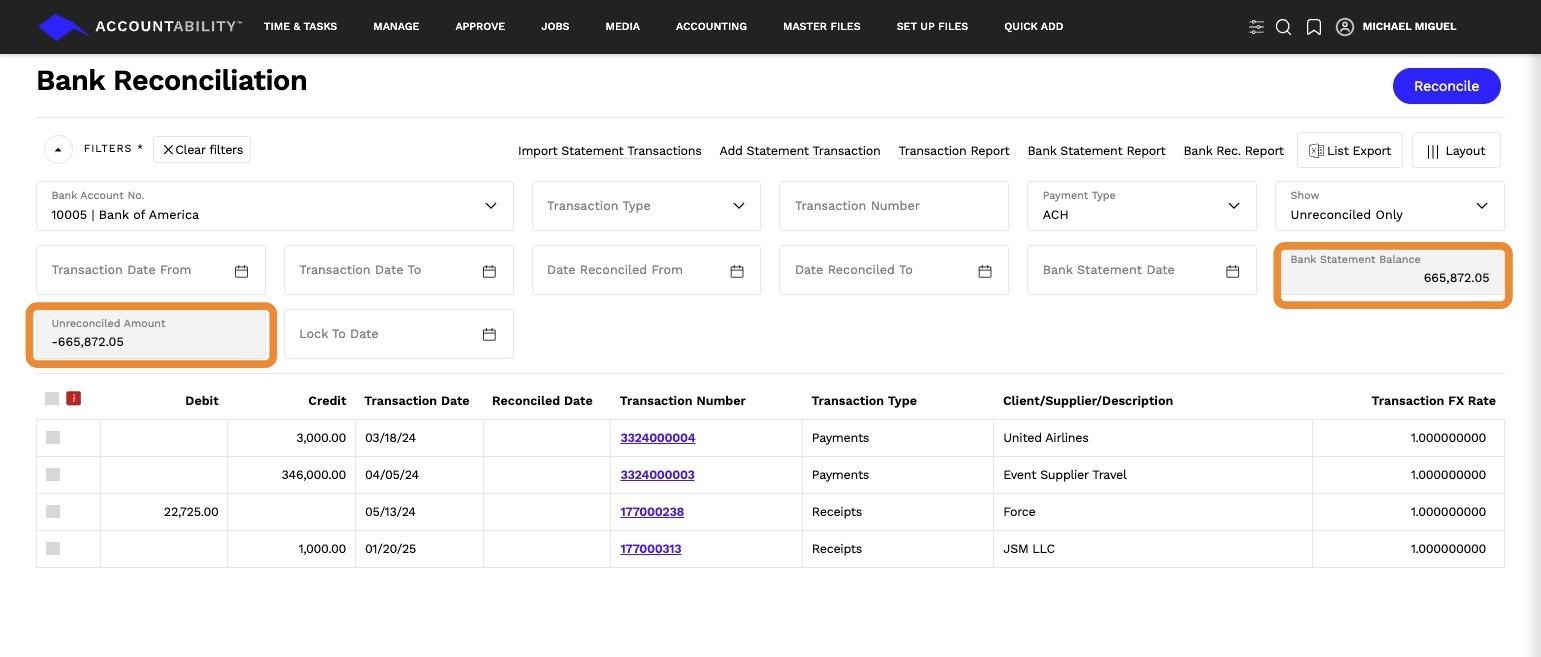
3. Key Financial Metrics
- Unreconciled Amount – The sum of unmatched transactions requiring reconciliation.
- Bank Statement Balance – Displays the balance based on the selected bank statement.
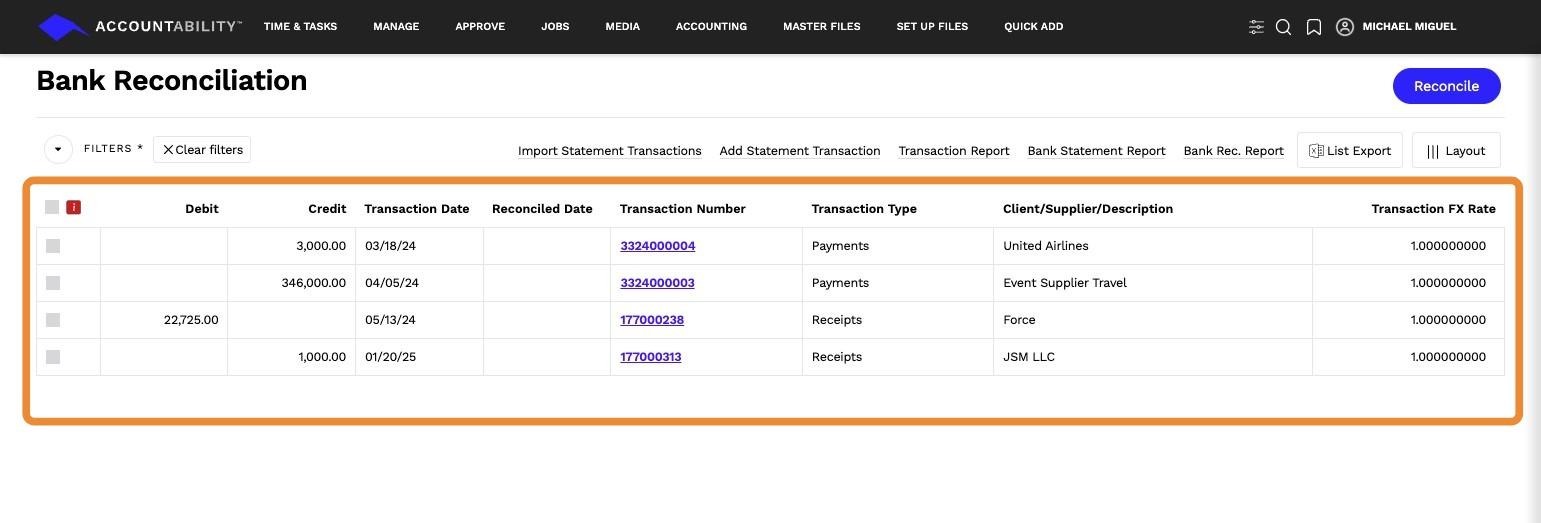
4. Transaction List
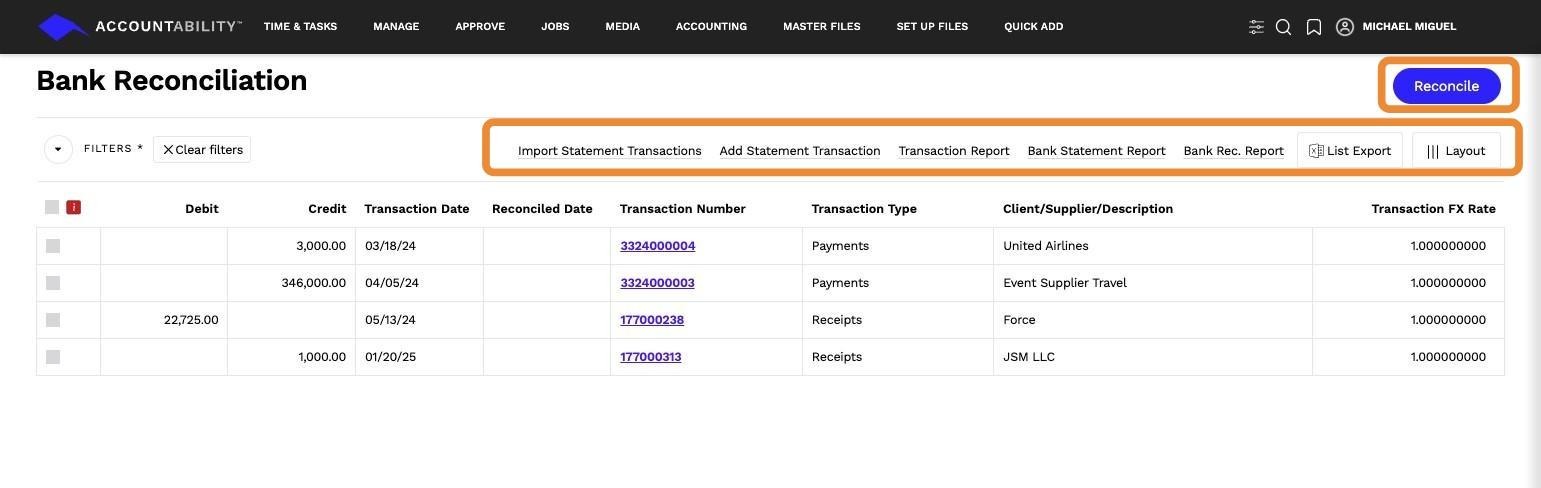
- Displays all transactions based on selected filters.
- Key columns include:
- Debit/Credit – Identifies payments and deposits.
- Transaction Date – The date the transaction was recorded.
- Reconciled Date – The date the transaction was marked as reconciled.
- Transaction Number – Unique identifier for each transaction (clickable for details).
- Transaction Type – Categorizes transactions as Payments or Receipts.
- Client/Supplier/Description – Provides transaction context.
- Transaction FX Rate – Displays the exchange rate if applicable.
5. Action Buttons
- Import Statement Transactions – Upload bank statement transactions for reconciliation.
- Add Statement Transaction – Manually add a transaction for reconciliation.
- Transaction Report / Bank Statement Report / Bank Rec. Report – Generate detailed reports.
- List Export – Download transaction data for external analysis.
- Layout – Customize displayed columns.
- Reconcile – Start the reconciliation process for outstanding transactions.
Steps to View Transactions:
6. Navigate to ACCOUNTING > General Ledger > Bank Reconciliation.
7. Select the Bank Account No. to display transactions.
Apply relevant filters to refine search results.
Review transactions in the table and click a Transaction Number for more details.
Click on the Columns button to select which columns appear on the page, as well as determine the column and sort order. Click here to learn more.
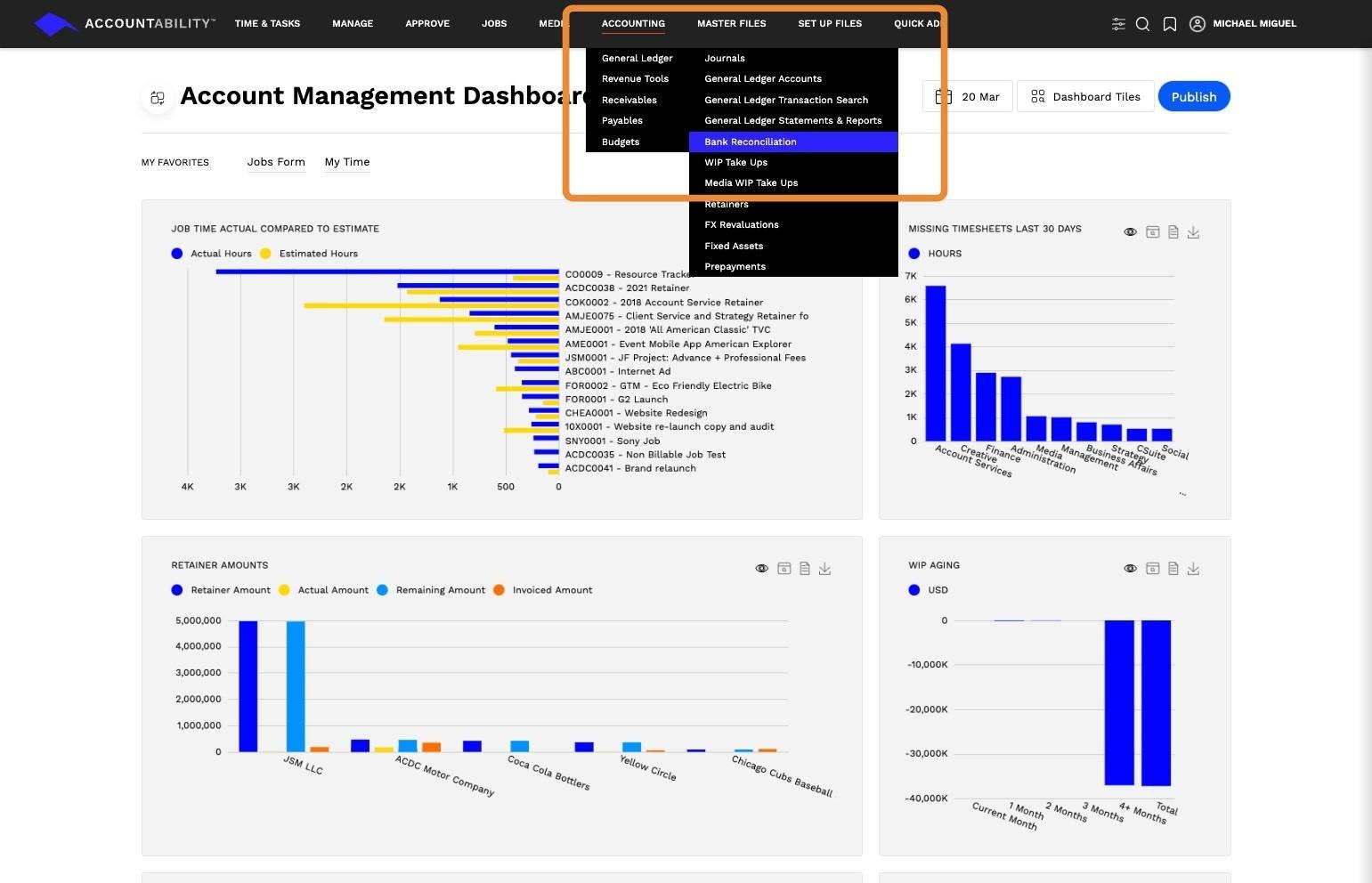
1. Navigate to ACCOUNTING > General Ledger > Bank Reconciliation.
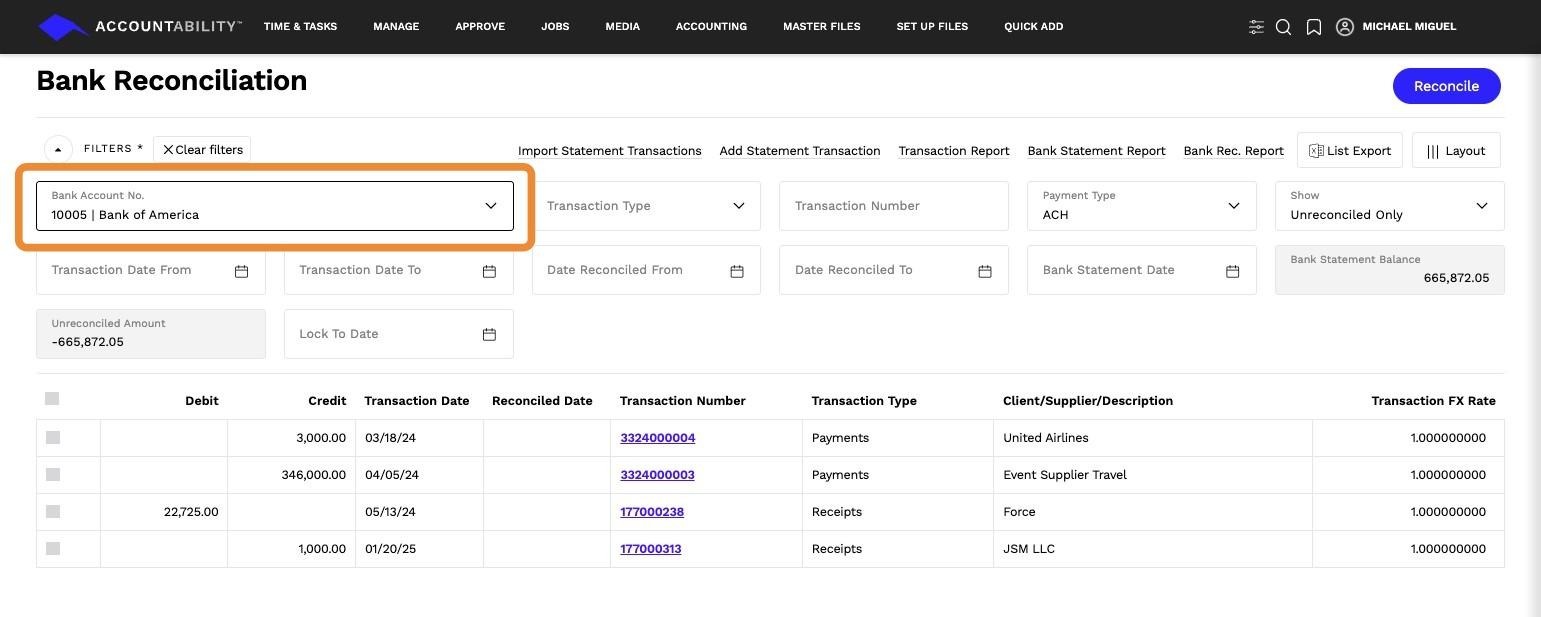
2. Select the Bank Account No. to be reconciled.
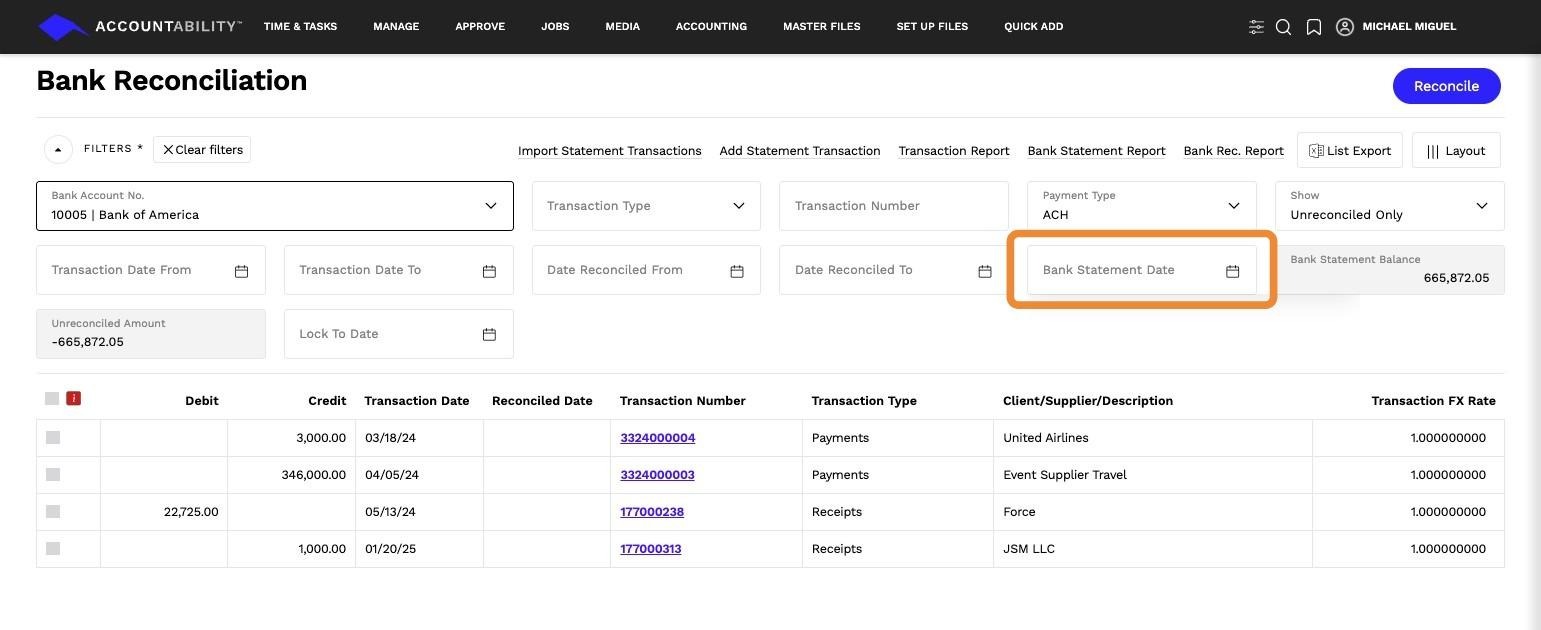
3. Enter or select the Bank Statement Date to match the statement period.
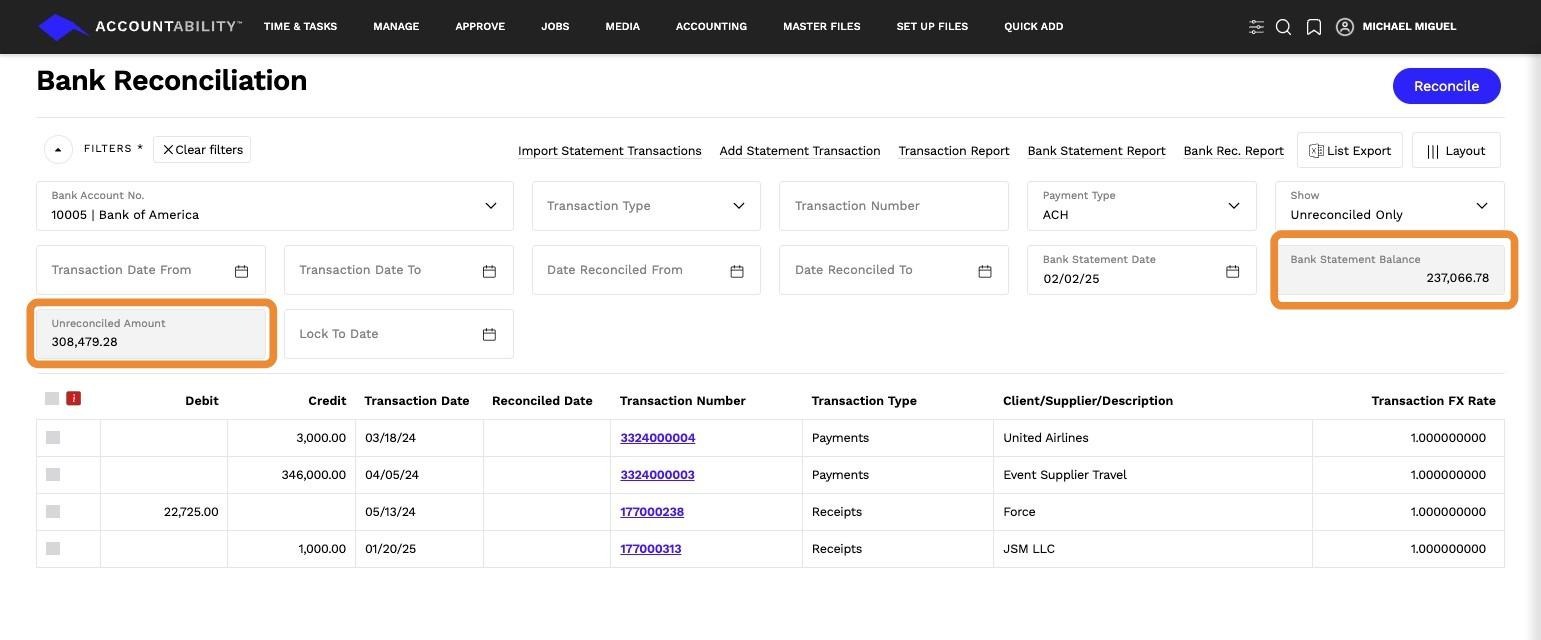
4. Enter the Bank Statement Balance (this field will auto-populate if bank transactions are imported).
Review the Unreconciled Amount, which is the difference between the GL Bank Balance and the Bank Statement Balance.
5. Click on Reconcile
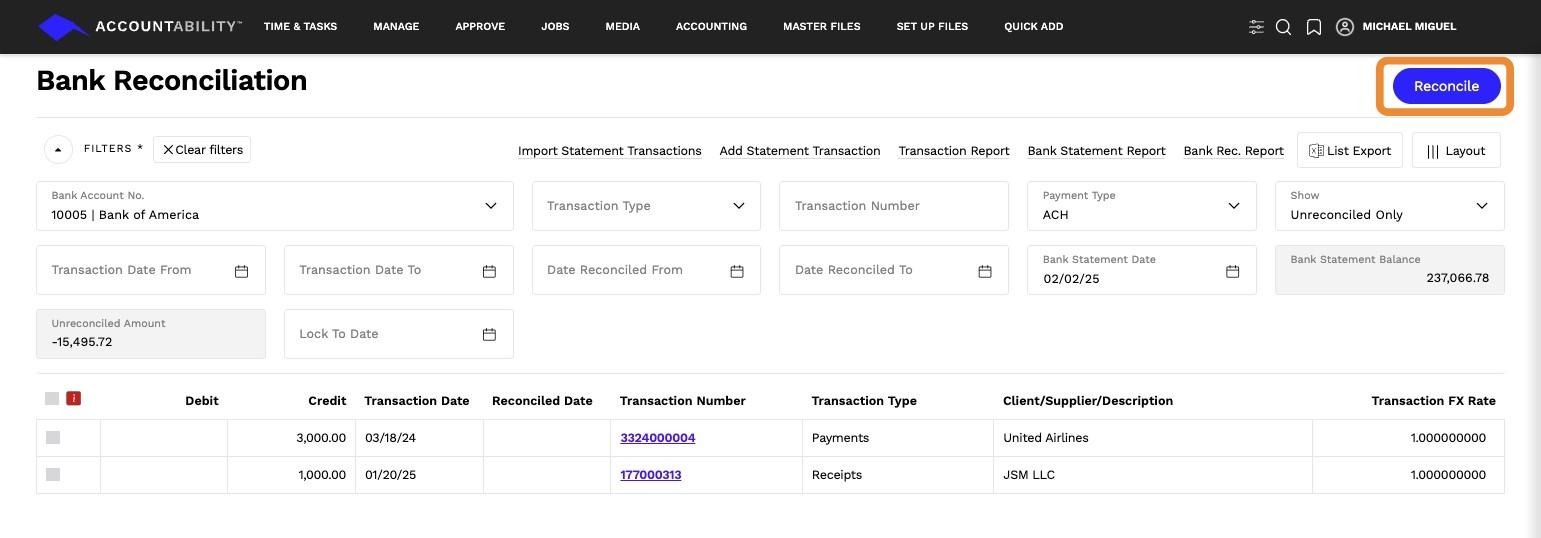
6. Compare the transactions listed in Counta with those in the bank statement:
- Match transactions that appear in both records.
- Identify and investigate missing or duplicate entries.
- If needed, add manual transactions using the Add Statement Transaction option.
As transactions are marked as Reconciled, the Unreconciled Amount will update automatically.
Continue reconciling transactions until the Unreconciled Amount reaches zero.
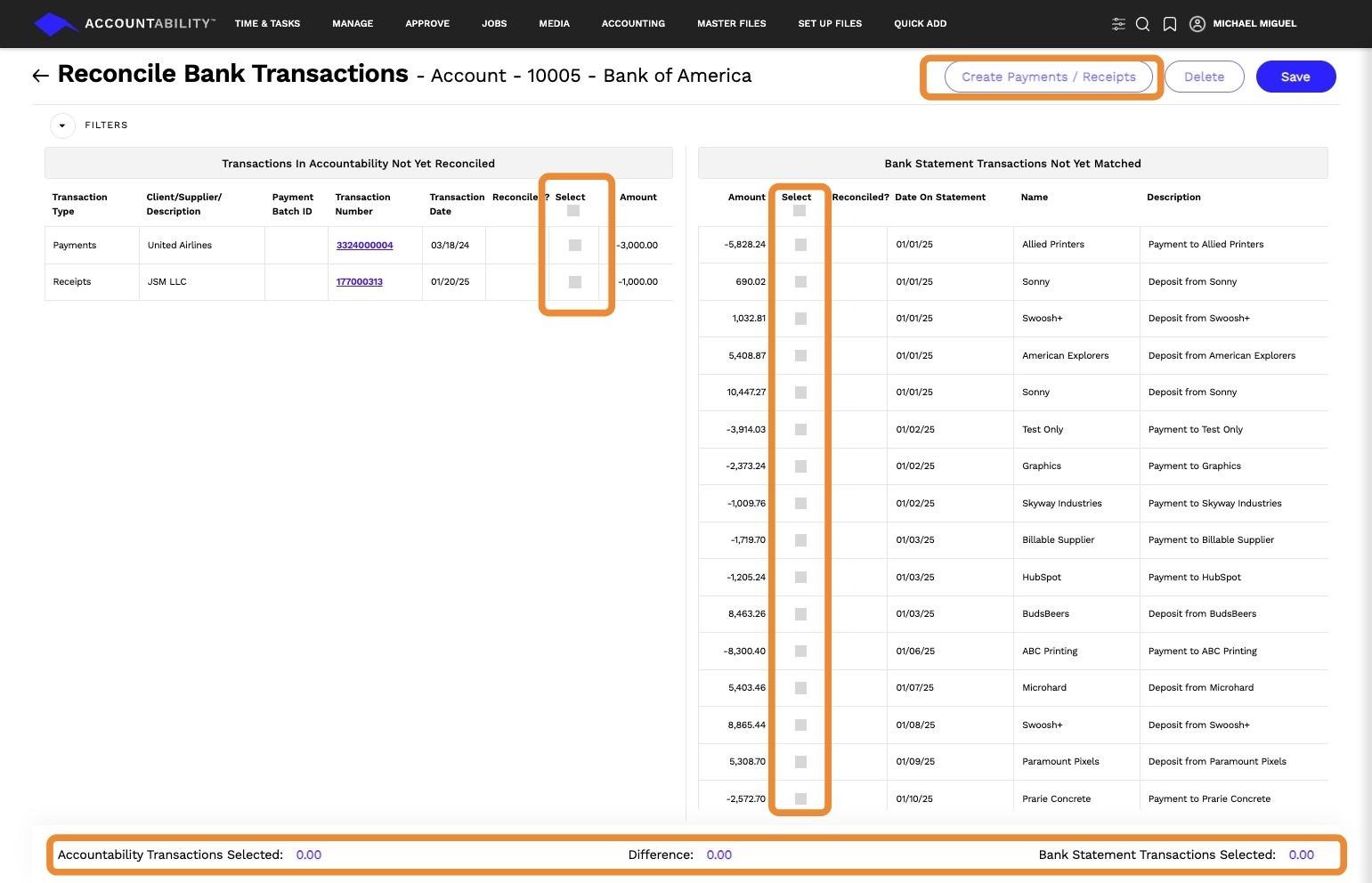
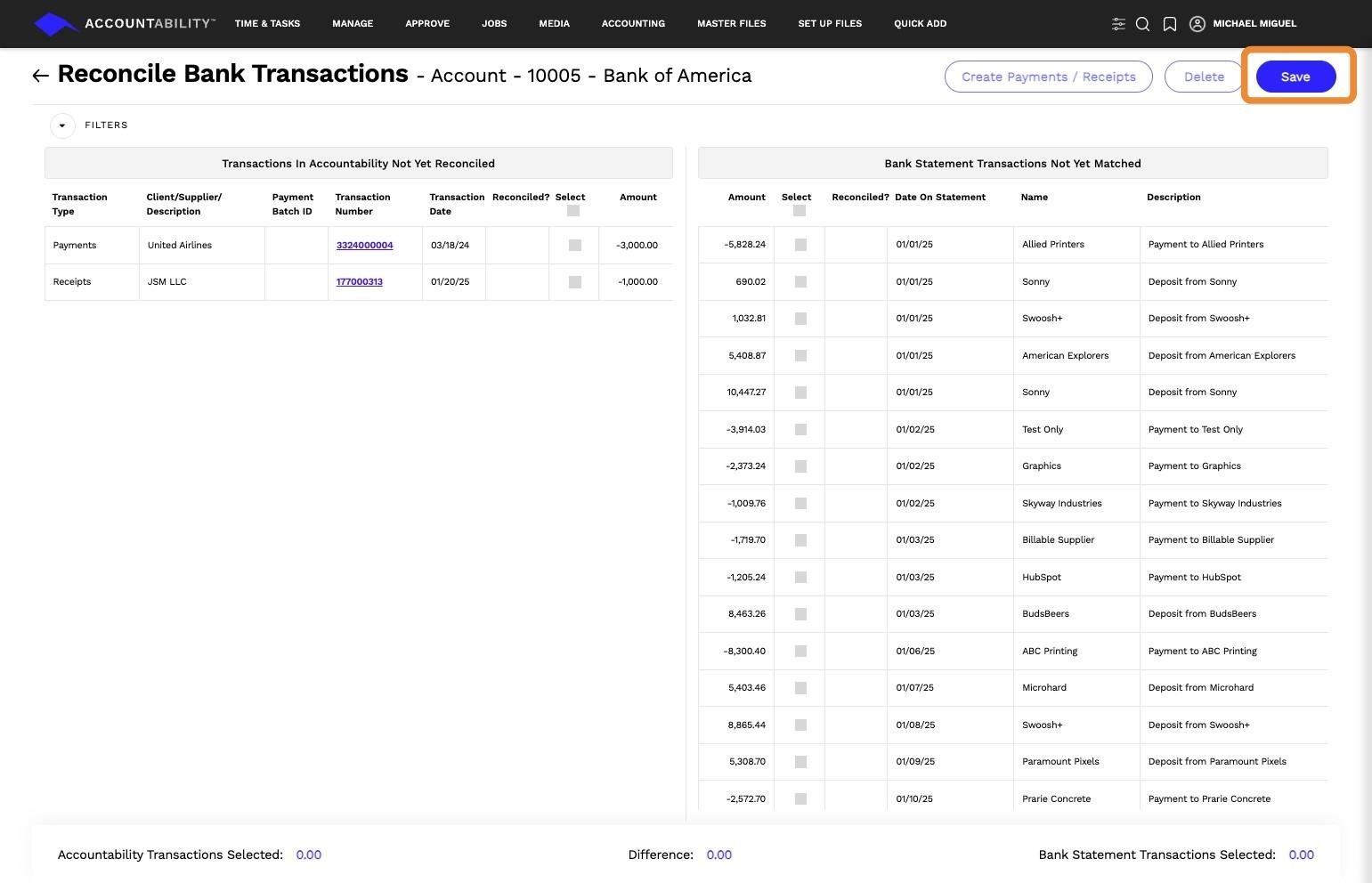
7. Click Save to finalize the reconciliation process.
8. Once reconciled, consider locking the period by setting a Lock to Date to prevent further changes.
Tip: - If discrepancies arise, verify whether:
- A transaction was recorded in the wrong period.
- A duplicate transaction was entered.
- Bank fees or interest were not recorded in Counta.
- Use the Bank Statement Report and Transaction Report for detailed analysis.
- Ensure all outstanding transactions from prior periods have been reconciled before closing the period.