![AccountAbility_logo_primary_fullcolor-1.png]](https://knowledgebase.counta.com/hs-fs/hubfs/AccountAbility_logo_primary_fullcolor-1.png?height=40&name=AccountAbility_logo_primary_fullcolor-1.png)
Step by Step Guide:
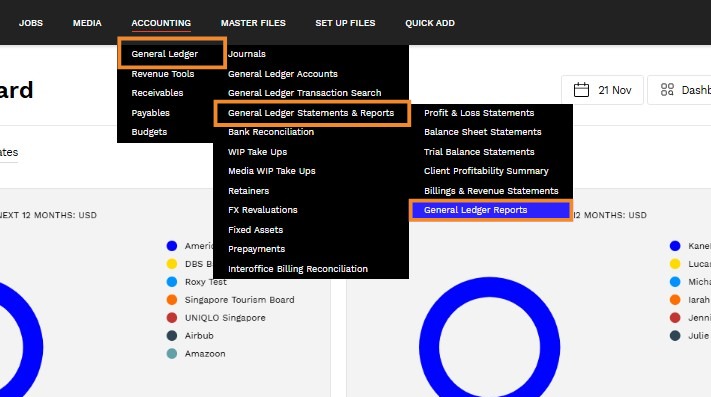
1. Navigate to Accounting > General Ledger > General Ledger Statements & Reports > General Ledger Reports.
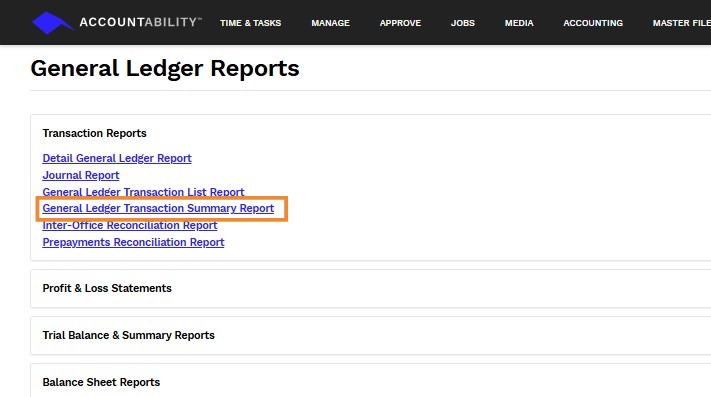
2. Expand the Transaction Reports section and click General Ledger Transaction Summary Report.
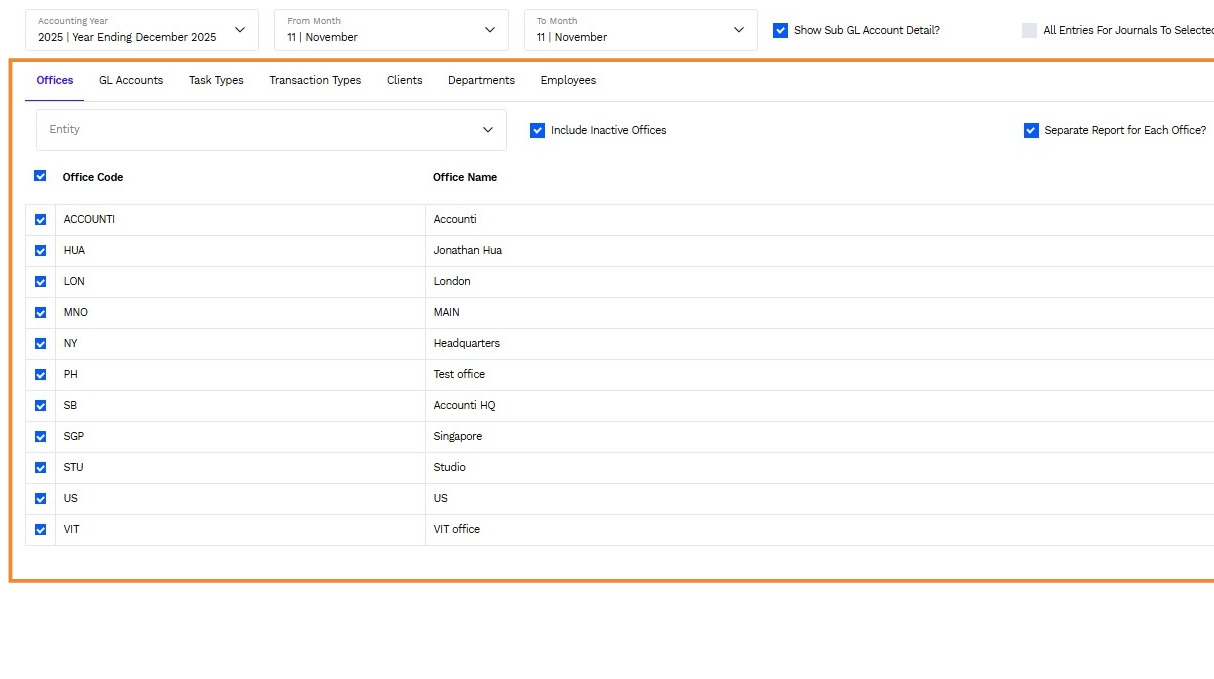
3. Enter the Required Report Parameters
Define the scope of the report by filling in the following fields:
- Accounting Year – Select the year for the report.
- From Month – Select the starting month of the report.
- To Month – Select the ending month of the report.
- Show Sub GL Account Detail? – Checked by default. If created with a header account, uncheck this option to roll up the report at the header account level.
- All Entries for Journals to Selected Accounts? – (Optional) Check this box to include all journal entries for selected accounts.

4. Apply Additional Filters (Optional)
Users can refine the report further by selecting specific filters:
- Offices – Choose one or more offices (the list is based on office restrictions in the employee record).
- GL Report – Select a predefined grouping of general ledger accounts.
- GL Accounts – Choose specific GL accounts for a more focused report.
- Task Types – Filter transactions based on task categories.
- Transaction Types – Select specific transaction types to include.
- Clients – Generate the report for selected clients.
- Departments – Filter by department to analyze department-specific transactions.
- Employees – View transactions related to specific employees.
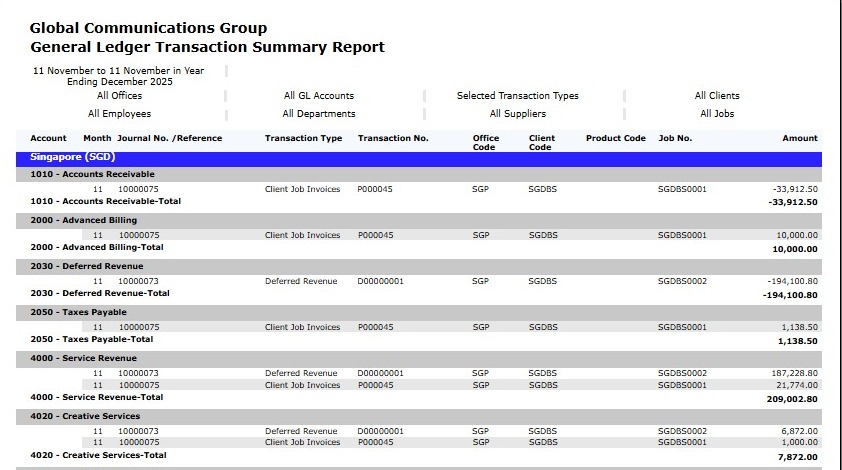
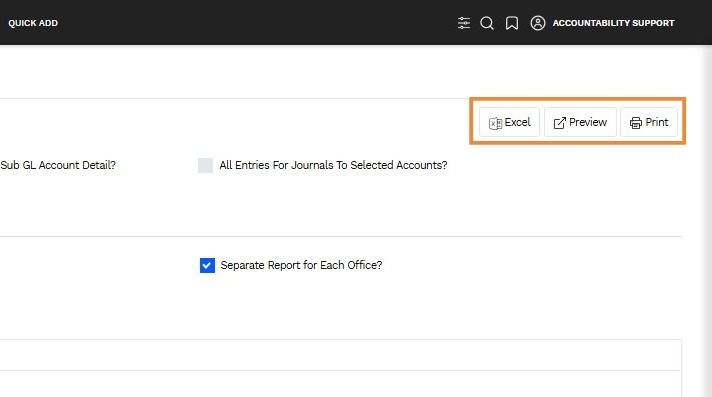
5. Click Preview to view the General Ledger Transaction Summary Report on the screen.
(Optional) Click Excel to download the report in data format for further analysis.
6. The General Ledger Transaction Summary Report provides a structured, high-level view of financial transactions, making it an essential tool for account reconciliation, auditing, and financial reporting. By using filters and report parameters, users can generate tailored reports that meet specific business needs.