![AccountAbility_logo_primary_fullcolor-1.png]](https://knowledgebase.counta.com/hs-fs/hubfs/AccountAbility_logo_primary_fullcolor-1.png?height=40&name=AccountAbility_logo_primary_fullcolor-1.png)
Step by Step Guide:
Tip: Why This Matters for Agencies
- Compliance: Meet local tax regulations (e.g., VAT in France, GST in Canada).
- Efficiency: Automate tax calculations and postings for supplier and client invoices.
- Accuracy: Ensure correct GL postings for input and output taxes, reducing manual adjustments.
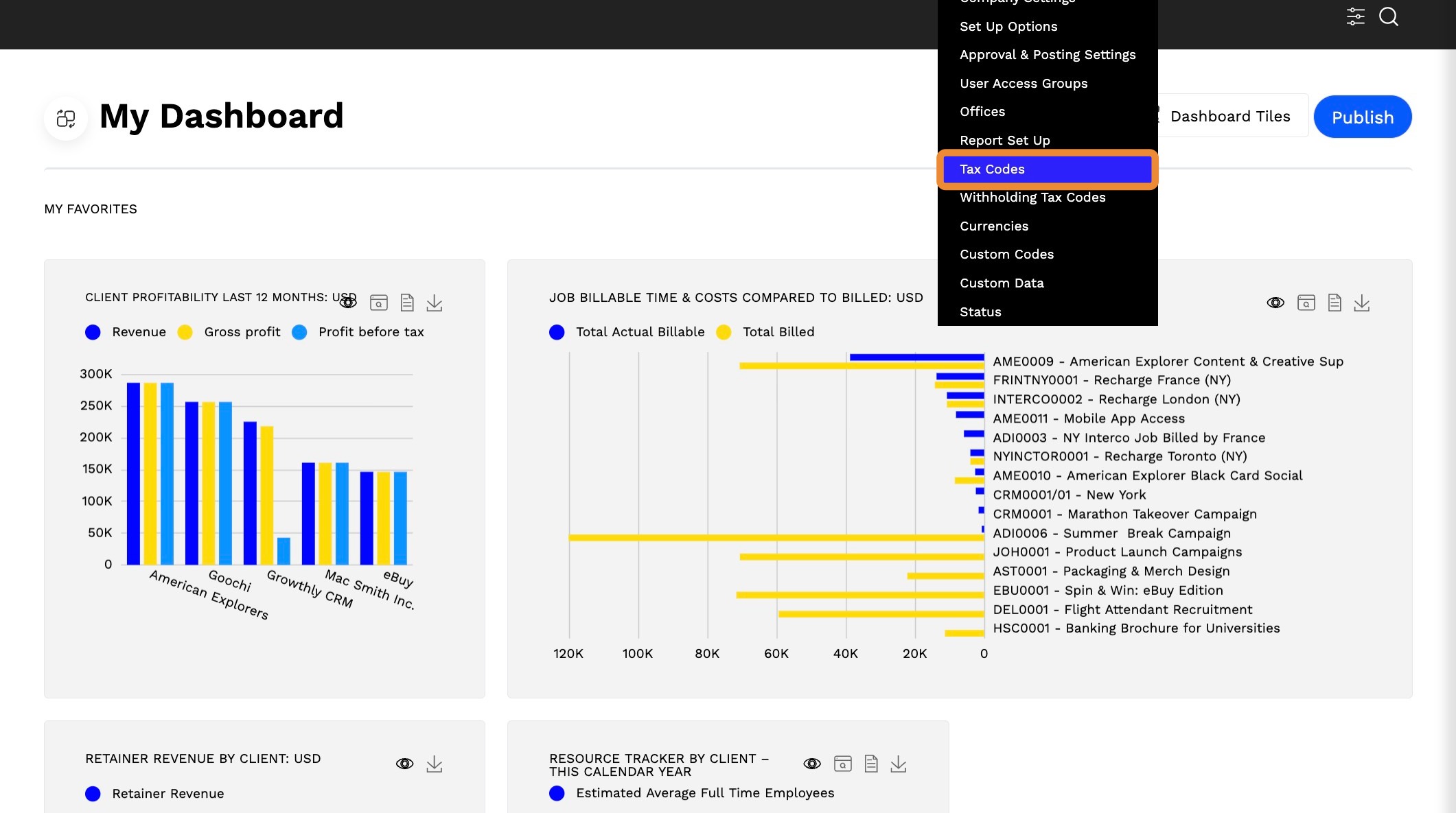
1. Navigate to SET UP FILES > Tax Codes.
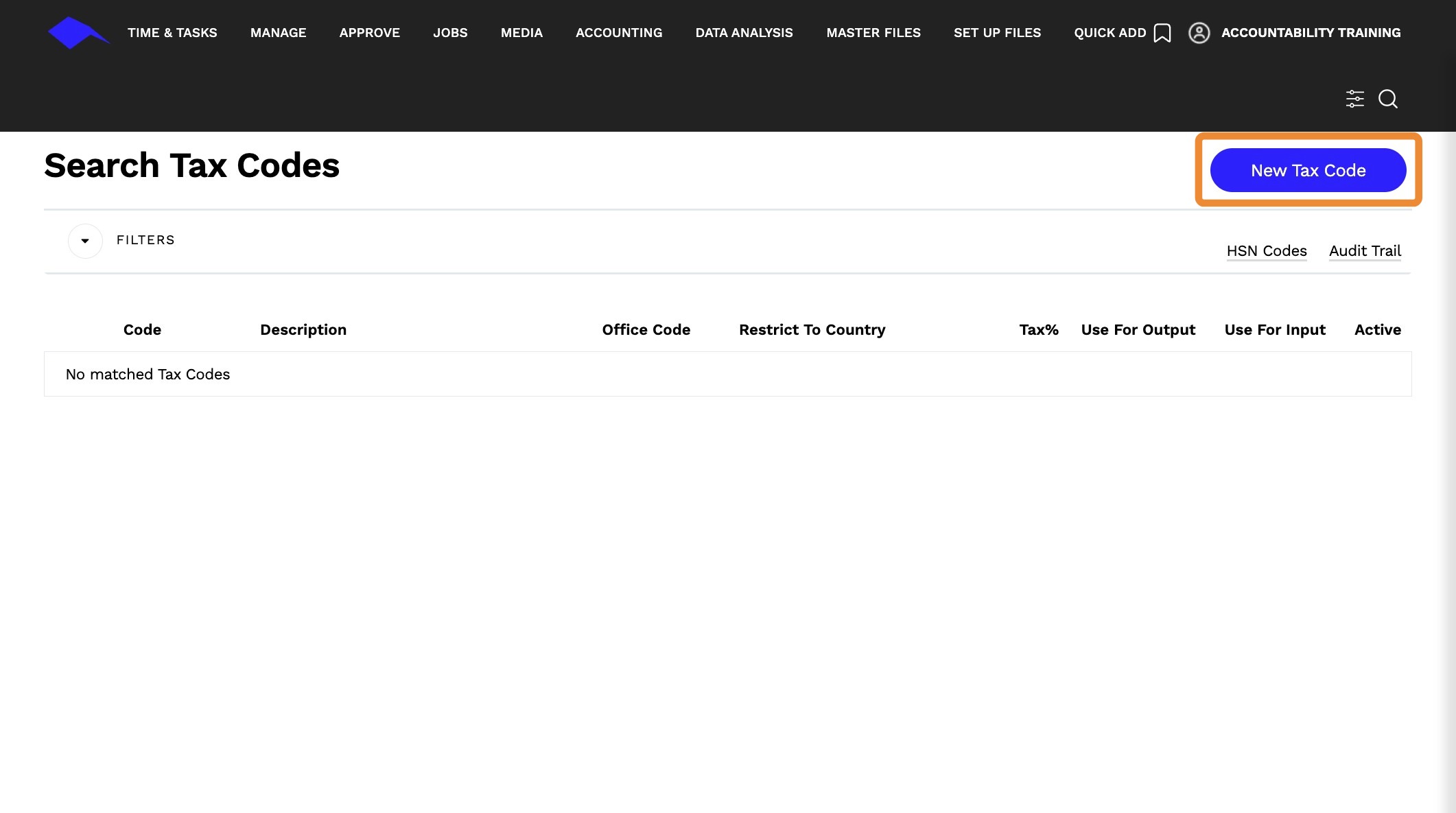
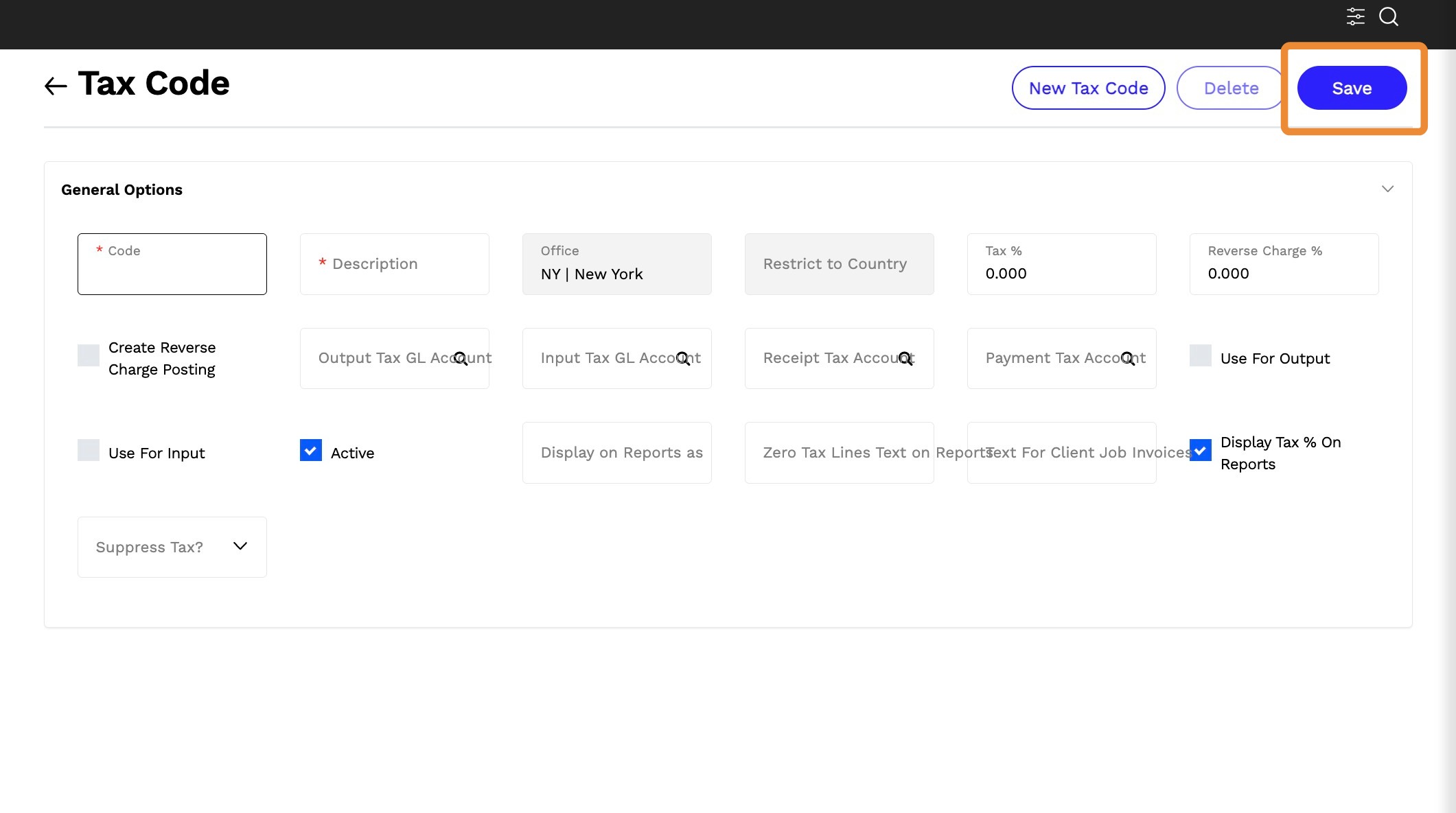
2. Click NEW TAX CODE
3. ## Step 2: Enter Tax Code Details
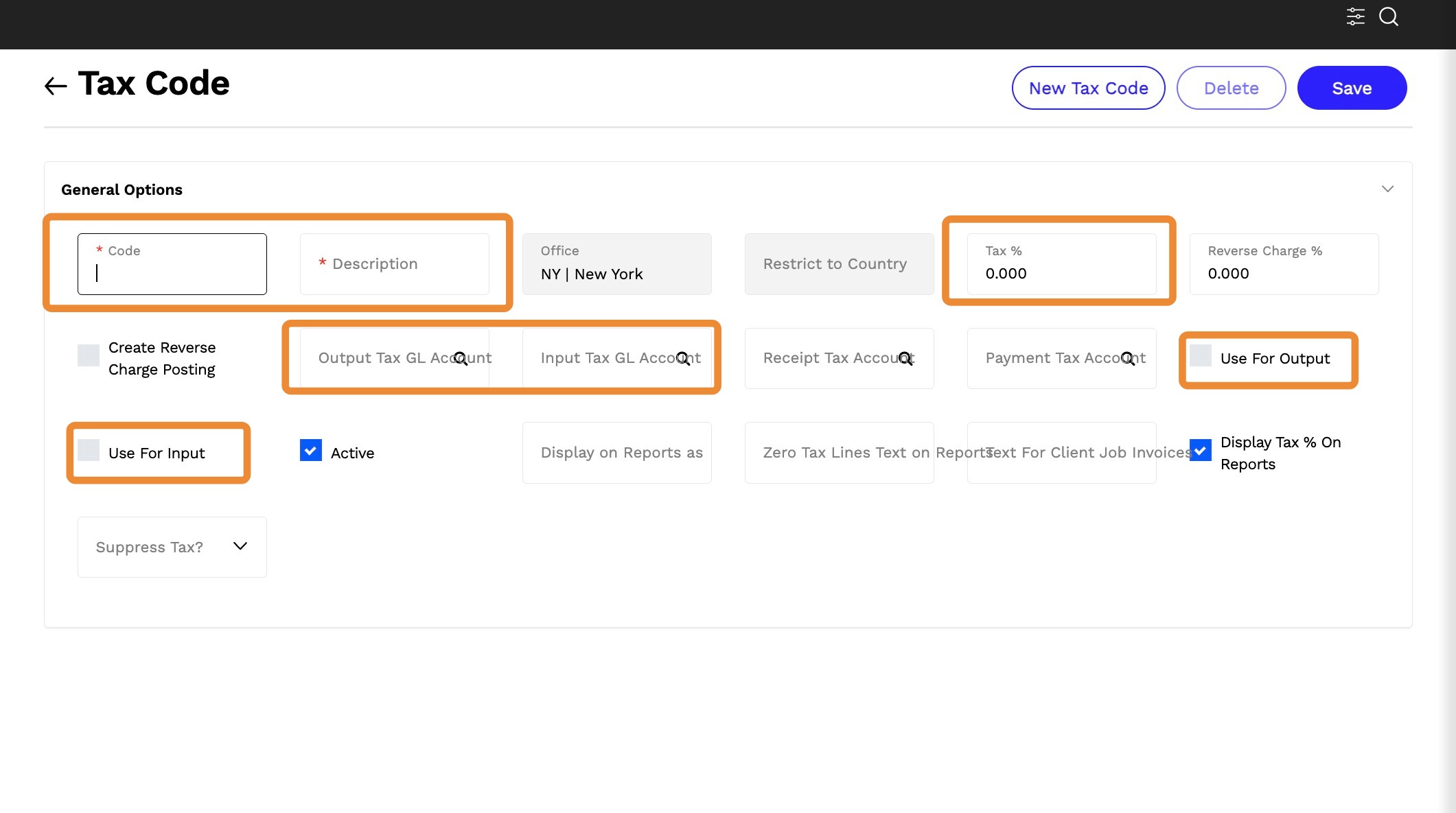
Provide the following information:
- Tax Code
A short identifier (e.g.,VAT20FRfor 20% French VAT). - Description
A clear name for the tax (e.g., VAT 20% France). - Tax Rate (%)
Enter the percentage (e.g.,20for 20%). - GL Accounts
- Input Tax Account: For supplier invoices.
- Output Tax Account: For client invoices.
- Usage Options
- Enable for billing (client invoices).
- Enable for costs (supplier invoices).
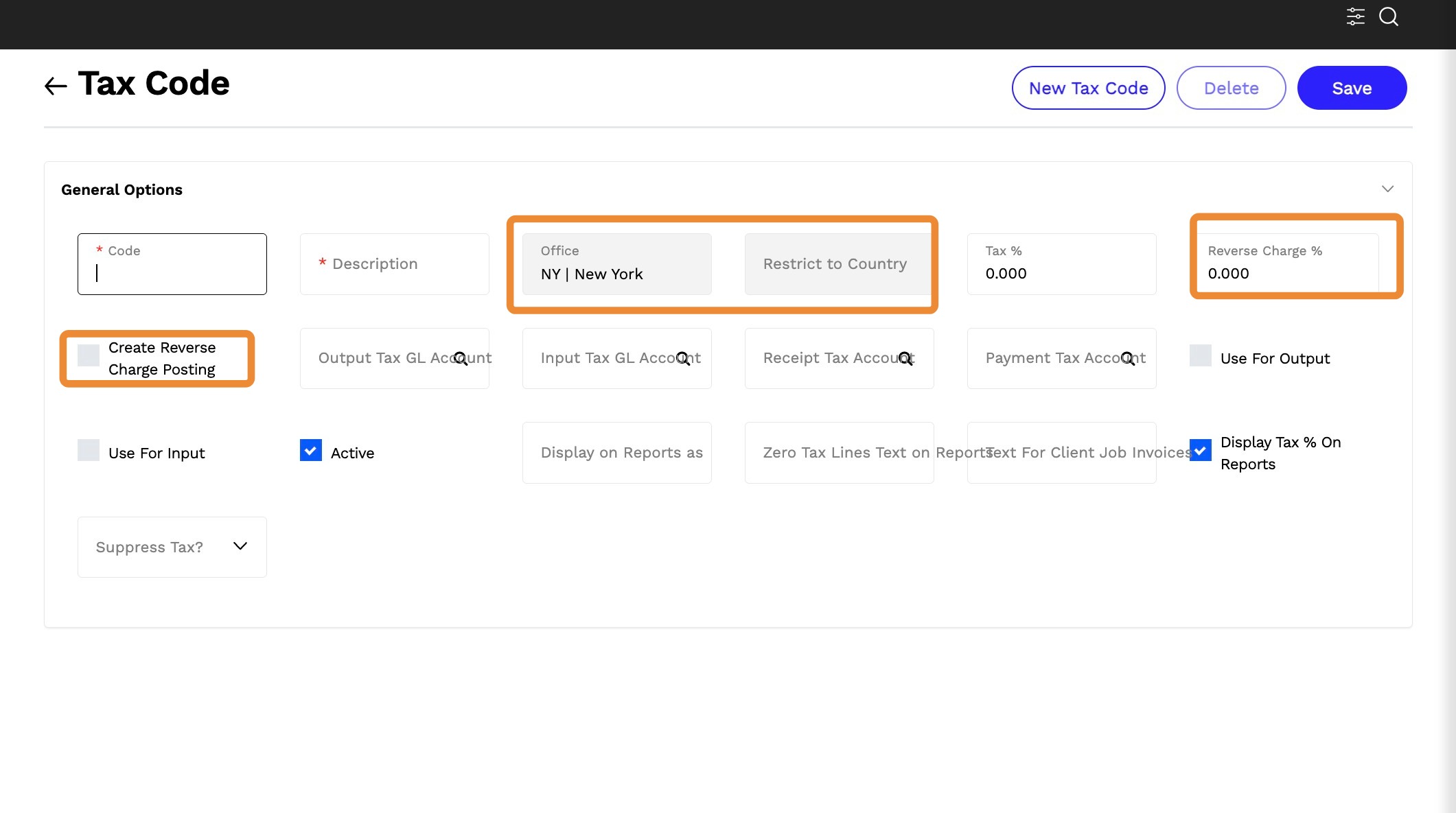
- Restrict to specific offices if needed.
4. ## Step 3: Advanced Settings
- Reverse Charge Handling
If applicable, set up reverse charge percentages. The system will auto-create reversing postings for cross-border services. - Office Restrictions
Limit tax codes to specific offices for regional compliance. - Default Behavior
Decide if the tax code should default at:- Office level
- Supplier level
- Client level
- Override at transaction entry if needed.
5. Click SAVE.
Tip: ### Best Practices
- Naming Convention: Use clear codes like
VAT20FR,GST10CAfor easy identification. - Multiple Rates: Set up all required rates (e.g., 20%, 10%, 5.5%, exempt).
- Office and Restrict to Country Fields:
Use these fields to restrict tax codes to specific offices or countries.
Important: You cannot use both fields at the same time. If you select one, the system will remove the previous selection and keep the most recent. - Tax % and Reverse Charge % Fields:
You cannot enable both for the same tax code. If you enter a value in Tax %, the system disables Reverse Charge %, and vice versa. One must be set to 0% to use the other. - Compliance Prep: For regions with upcoming e-invoicing laws (e.g., France 2026), ensure tax codes align with statutory reporting needs.
- Audit-Friendly: Use Accountability’s tax reports for reconciliation before filing returns.
Alert: ### Pro Tip
You can apply different tax codes on multiple invoice lines (e.g., taxable and non-taxable items) and record taxes via journal entries when needed.